5 Essential Premarital Conversations Every Engaged Couple Needs to Have
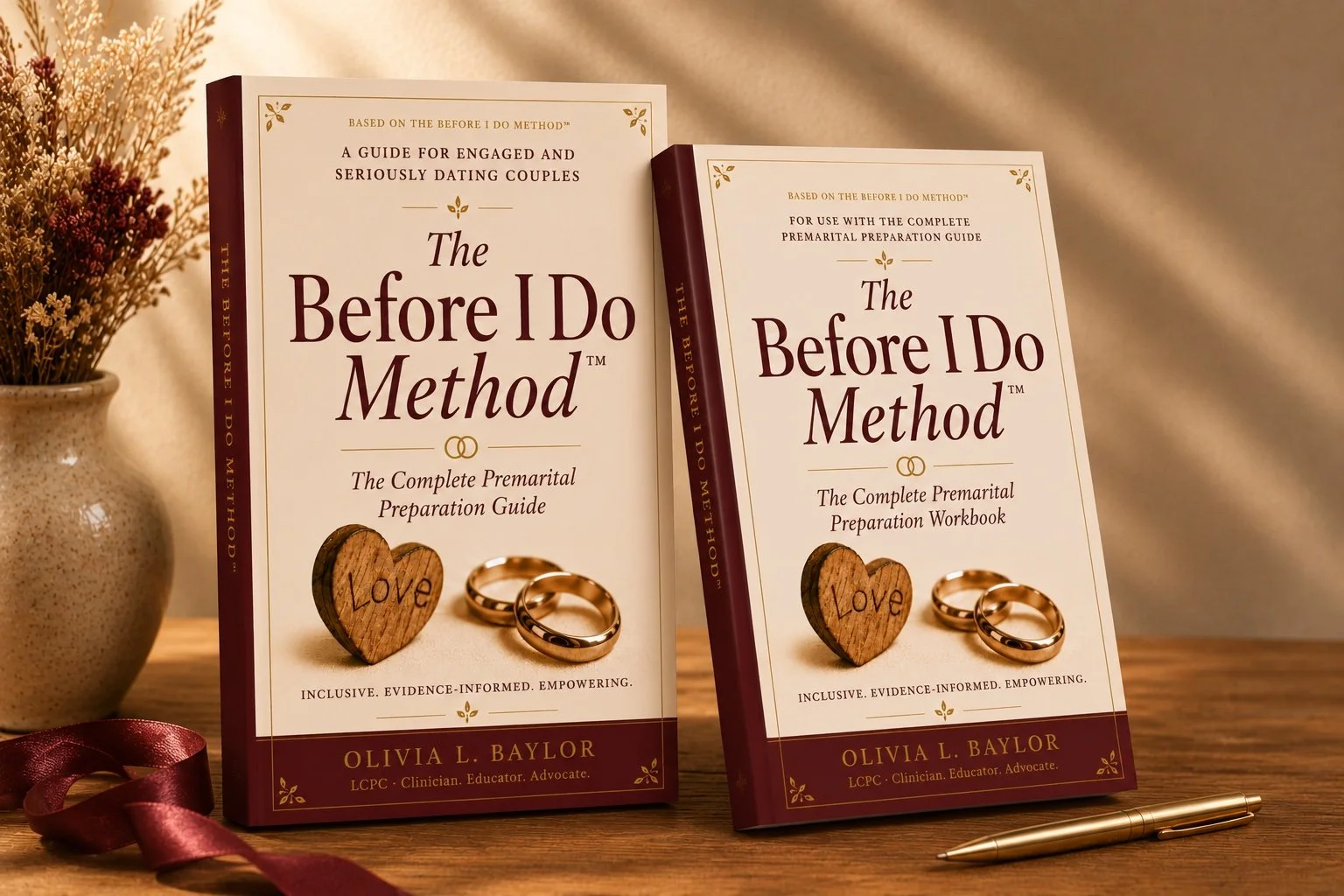
The Before I Do Method™
Order The Before I Do Method™:
The complete two-book premarital set is available now.
Somewhere between choosing a venue and figuring out who's inviting your third cousin, most couples skip the conversations that actually determine whether the marriage will thrive.
Premarital counseling questions aren't about doubting your relationship. They're about surfacing what's already there — the assumptions, the unspoken expectations, the tender places you've both been carefully avoiding — so you can meet each other more fully before the wedding.
There are hundreds of questions you could ask each other before marriage. But there are only 5 conversation categories you can't afford to skip. If you cover these five, you'll be miles ahead of most couples walking down the aisle.
1. Communication: How You Talk (and How You Fight)
How you communicate as a couple predicts more about your marriage than almost any other factor. Not whether you fight — every couple fights. HOW you fight, whether you repair, and whether you can sit with each other's discomfort without shutting down or lashing out.
In this conversation, you're mapping the patterns you already have. What did each of you learn about handling conflict from your family growing up? What do you want to bring forward, and what do you want to leave behind?
You're also naming what you each need in tense moments. Some partners need space. Some need proximity. Some need to be heard before they can problem-solve. If you don't know the difference — and can't ask for it — you'll spend years hurting each other in ways neither of you meant.
2. Family: The Systems You're Both Marrying Into
You're not just marrying each other. You're marrying each other's family systems — the good, the difficult, and the unhealed. This conversation brings the invisible into the open.
What role do your families play in your daily lives now? What do you want that role to look like after marriage? What holidays are non-negotiable? What family patterns do you refuse to repeat?
If either of you has family members whose behavior crosses lines — with alcohol, with money, with control, with racism, with religious pressure — this is where you get on the same page about how you'll handle it TOGETHER. Not each of you fending for yourselves against your own side.
3. Money: What You Believe About It
Money conflict is one of the top predictors of divorce. Not because of the money itself — because of the MEANING each partner attaches to it.
Get real about what money meant in each of your families growing up. Was it a source of safety? Fear? Secrecy? Power? Punishment? Whatever those early stories are, they're driving your current spending, saving, and hiding patterns whether you realize it or not.
You also need to be transparent NOW about the numbers: credit scores, debts, income, savings, and financial goals. And you need to make specific decisions about how you'll operate: fully combined, separate, or hybrid. A shared threshold for major purchases. A plan if one of you loses income.
4. Intimacy: Sex, Desire, and Connection
Couples who navigate physical intimacy well share one thing in common: they talked about it before marriage. Vulnerability isn't the goal — clarity is.
What does a healthy sex life look like to each of you across the next five, ten, twenty years? What do you each need to feel connected, wanted, and safe? What does infidelity mean to you — specifically, in your relationship? ("Cheating" isn't a universally defined term. Emotional connection, digital contact, and physical closeness all mean different things to different couples.)
If either partner is bringing sexual trauma, sexual shame, or unspoken preferences into the marriage, those need air before the wedding — not resentment building for a decade after.
5. Vision: The Life You're Building
What are you actually building together? Not the wedding — the marriage. Not the honeymoon — year 20.
Do you both want children? If yes, how many, and how will you raise them? If no, how will you build your life without them? What role does faith or spirituality play in your daily life and in the home you're creating? What are your dreams around career, geography, community, and legacy?
This is also where you talk about the hardest things — how you'll navigate serious illness, aging parents, the death of a child, or the end of your own life. Couples who avoid these conversations before crisis hits are the couples who fracture when it does. The couples who have these conversations early tend to make it through together.
How to Have These Conversations
Pick one category per week. Set aside 90 minutes without phones. Bring curiosity, not an agenda. If any category brings up more than you can hold on your own, that's exactly the time to bring in a premarital counselor, coach, or clergy member trained in premarital preparation.
The right premarital provider will help you facilitate these conversations without turning them into performance or conflict — and they'll give you frameworks, exercises, and specific questions designed to go deeper than "what are your goals?"
Want the Full Curriculum?
The five categories above are just the foundation. In The Before I Do Method™, my two-book premarital set, I walk couples through hundreds of specific, thoughtfully organized questions across every category above — plus the frameworks, reflection prompts, and exercises to actually process them together.
→ Order The Before I Do Method™, available now.
Prefer to Work With Someone One-on-One?
The Premarital Counseling Directory™ helps you find a provider who fits your specific relationship — culturally, spiritually, sexually, and clinically. Every listed provider has been vetted for both competence and inclusive practice.
→ Find a Premarital Counselor Near You
The most successful marriages aren't the ones where couples never fight. They're the ones where couples learned how to hear each other before the pressure ever came.
Start with the conversation you've been avoiding. See where it takes you.